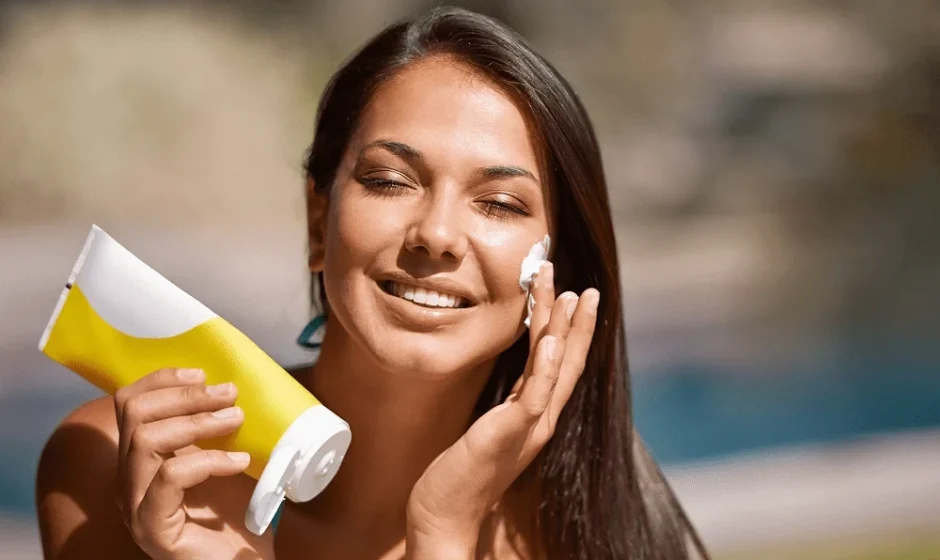

The sunscreen market is saturated with products that meet the regulatory requirement for sun protection factor (SPF) labelling while varying enormously in their impact on skin health beyond that single parameter. Ayurvedic sunscreen cream approaches UV protection from a fundamentally different premise than conventional chemical and physical sunscreens – one that prioritises the skin’s health and barrier integrity alongside the immediate protection from ultraviolet radiation that all sunscreens share as their minimum function. Understanding what distinguishes an ayurvedic sun cream from its conventional alternatives helps consumers make a more informed choice about the sun protection product they apply to their skin every day.
How Conventional Chemical Sunscreens Work and Their Limitations
Standard chemical sunscreens use synthetic UV-absorbing molecules – oxybenzone, avobenzone, octanoate, homovalvate, and related compounds – that absorb UV radiation and convert it to heat energy that dissipates from the skin. These compounds are effective UV absorbers, but several have properties that raise questions for daily users:
- Oxybenzone has been detected in blood, urine, and breast milk after topical application, and at high concentrations in aquatic environments near popular beaches, where its endocrine-disrupting effects on marine organisms are documented
- Avobenzone in its stabilised forms degrades photochemically over the course of a day’s sun exposure, reducing protective efficacy without visible sign to the user
- Octinoxate has been banned from sunscreens sold in Hawaii and several other jurisdictions due to its documented damage to coral reef ecosystems
- Many synthetic UV filter formulations cause sensitivity reactions in individuals with compromised skin barriers or reactive skin types
What Herbal Sunscreens Use Instead
Herbal sunscreens and ayurvedic sunscreen cream formulations rely primarily on physical UV blocking minerals – zinc oxide and titanium dioxide – as their UV protection foundation. These mineral filters work by reflecting and scattering UV radiation rather than absorbing and converting it, and they provide protection across both UVA and UVB spectrums from the moment of application rather than requiring the 15 to 30-minute absorption period that chemical sunscreens need before they become effective.
Zinc oxide in particular has a well-established safety profile – it is not systemically absorbed, is not associated with endocrine disruption, and is approved for use in wound care formulations and infant sunscreens due to its skin tolerance profile. In modern nano-particle formulations, zinc oxide produces the sheer, cosmetically elegant finish that earlier generations of mineral sunscreens lacked.
The Ayurvedic Botanical Layer and What It Adds
What distinguishes an ayurvedic sunscreen cream from a standard mineral sunscreen is the addition of botanicals that contribute protective, nourishing, and regenerative functions alongside the mineral UV block:
- Raspberry seed oil: contains natural UV-absorbing constituents and significant antioxidant capacity from its tocopherol and tocotrienol content – contributing both photoprotective and anti-inflammatory support
- Sesame oil: used in Ayurveda as a primary sun-protective oil for millennia, with research confirming its natural SPF contribution and antioxidant properties that help neutralise the free radical damage that UV exposure generates
- Neem: anti-inflammatory and antimicrobial botanical whose inclusion in an ayurvedic sun protection cream addresses the skin’s response to heat and UV-induced inflammation, particularly relevant for Pitta skin types prone to sun-triggered sensitivity
- Aloe vera: cooling, hydrating, and skin-calming – counteracting the dehydrating effect of sun exposure and UV-induced inflammation in a base that complements rather than conflicts with the mineral UV filters
SPF and Broad-Spectrum Protection in Ayurvedic Formulations
A common misperception about ayurvedic sun cream is that natural formulations cannot achieve the SPF levels that synthetic alternatives provide. Quality mineral-based ayurvedic sunscreen cream formulations achieve SPF 30 and SPF 50 ratings through adequate zinc oxide concentration – typically 15 to 25 per cent by weight – and are tested for both SPF and UVA protection through the same regulatory testing methodologies that conventional sunscreens use.
The broad-spectrum protection that dermatologists recommend – covering both UVA (which penetrates deep into the dermis and drives photoaging) and UVB (which causes sunburn and DNA damage in the epidermis) – is achievable with zinc oxide alone, making the broad-spectrum claim of a well-formulated ayurvedic sun protection cream as scientifically supportable as that of any conventional sunscreen.
Conclusion
An ayurvedic sunscreen cream that combines mineral UV filtration with thoughtfully selected protective botanicals provides daily sun protection that is not just adequate but actively supportive of the skin’s health – addressing the UV protection requirement through ingredients whose safety profiles, environmental impact, and skin compatibility are meaningfully better than many of the synthetic alternatives that still dominate the conventional sunscreen market. For those committed to clean formulations in their daily skincare practice, herbal sunscreens represent a sun protection choice without the compromises that conventional chemical alternatives require. When paired with a well-formulated natural face moisturizer, this approach helps maintain hydration, support the skin barrier, and create a balanced skincare routine that protects the skin from both environmental stress and moisture loss throughout the day.